 CocoGuanacaste.com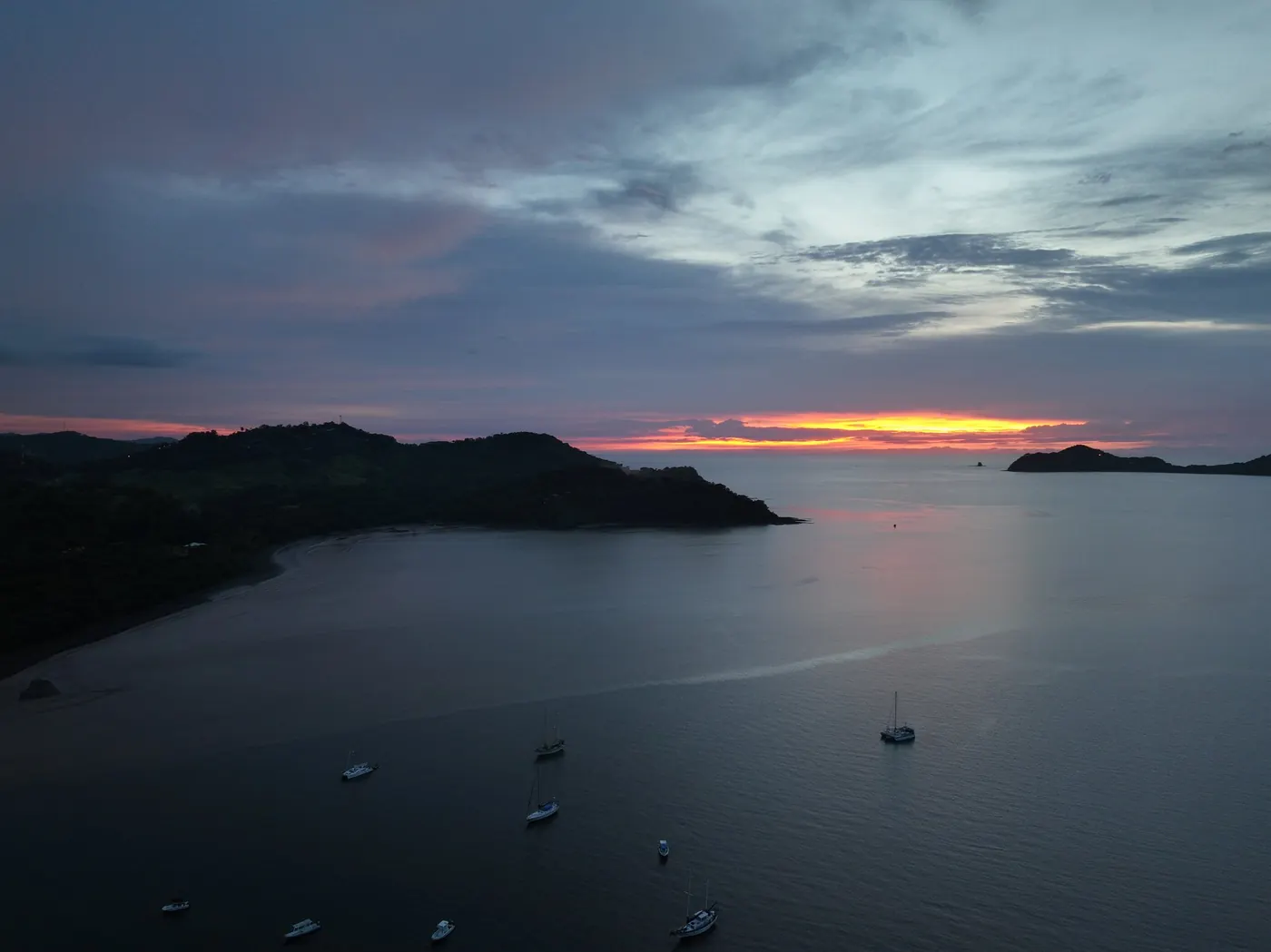
Boat trips are a big part of a stay in Playas del Coco. The town sits on a sheltered bay where boats anchor safely, so outings to coves, islands and fishing grounds start right from town. This guide suits families, couples, snorkelers and anglers who want to know what each trip involves before they book.
Sailing and snorkel cruises
Sailboat and yacht trips are part of Coco's local offer. A typical day sail follows the coast, stops at a sheltered spot to snorkel and may pull up near a quiet beach.
Some trips head toward Culebra Bay and the Papagayo Peninsula, where several white-sand beaches are mostly reached by boat. Ask how long you'll spend sailing versus swimming, and whether snorkel gear and lunch are included.
If snorkeling is the main goal, compare these cruises with dedicated snorkeling and diving trips, which go to sites chosen for marine life.
Sunset cruises
Sunset watching is part of daily life in Coco, and an evening sail lets you see it from the water. Ask how long the trip lasts and whether there's a swim stop.
Bring a light layer, since the breeze on deck can feel cool after dark. Ask where and how you board.
Coastal and wildlife tours
A boat ride along this rocky coast can turn up caves, islets and, in season, dolphins. Humpback whales, nurse sharks, manta rays and sea turtles also live in these waters, depending on the month.
Whale and dolphin watching is a regulated activity. INCOPESCA, the national fisheries institute, issues licences for it, so ask your operator about theirs.
Trips to the Bat Islands (Islas Murciélago) enter the marine sector of Santa Rosa National Park. The Guanacaste Conservation Area (ACG) requires boats to reserve before entry and does not allow visitors to land on the islands.
Surf trips
Surfers ride boats from Coco to Ollie's Point, a remote break with no homes or businesses nearby. The waves suit moderate and experienced surfers. Witch's Rock (Peña Bruja), off Playa Naranjo, lies in Santa Rosa National Park, so trips there follow ACG rules.
Fishing trips
Coco grew up as a fishing village, and sport fishing still matters here. Fishing charters run from Coco and the wider Papagayo area. Anglers target billfish such as sailfish and marlin, as well as roosterfish.
Plan for these points:
- Fishing card: INCOPESCA requires anyone sport fishing, including the boat crew, to carry a sport fishing card. Ask your charter whether it arranges cards for guests.
- Protected waters: ACG bans fishing in the marine sector of Santa Rosa National Park, including the Bat Islands.
- What's included: confirm the boat size, trip length, gear and drinks before you pay.
For charter options, see fishing charters from Coco and Papagayo on SportsFish Costa Rica.
Choosing the right trip
Families with young kids: a shorter sail or snorkel cruise with stops in sheltered water works well. Ask about life jacket sizes and shade on board.
Couples: a sunset sail is an easy evening out, with dinner in Coco afterward.
Snorkelers: pick a trip with at least two stops and time in the water at each one.
Surfers: look for a boat trip built around the surf breaks, and match it to your level.
Anglers: plan a full or half day on a fishing charter, and sort out your fishing card first.
Bookable sailing and sunset trips
- Private afternoon sunset cruise: a cruise for your group alone, meeting at the main beach access in Coco. The boat needs a minimum number of guests to sail. View on Viator Partner link
- Private coastal cruise: a private boat outing for your group along the coast, with wildlife spotting, a snorkel stop and beach time. The listing also includes fishing lines for fun, so ask whether fishing cards are covered. The captain meets you on the beach near many hotels in the area. View on Viator Partner link
- Private morning sail and snorkel: a morning sail with snorkeling for your group, from the main beach access in Coco. View on Viator Partner link
Boat trips by season
The dry season runs from about mid-November to mid-May. Strong trade winds blow mainly from December to March, and they can make the sea rough. The captain makes the final call on whether a trip goes out.
The rainy season usually starts in early to mid-May and ends in early to mid-November. Rain often eases in July and August.
Book boat days early in your trip, and keep a spare day in case the wind cancels a sail. Read about windy months and calmer seas before you pick dates.
What to check before you book
- Does the company hold current permits and insurance?
- Are there life jackets for every passenger, including children's sizes?
- Where does the trip board, and how do you get on the boat?
- What happens if wind or weather cancels the trip?
- What's included: snorkel gear, food, drinks, transport from your hotel?
If you'd like a short walk to the morning departure, look at where to stay near the boat departures.
Sea conditions and park rules change, so check current conditions with your operator the day before.
See more things to do in Coco for days on land.